Monday, 8 July 2024

Snails at Preston under Scar - and flowers, mosses, and lichens

 On Sat 6 July the Yorkshire Naturalists' Union held their VC65 Field Meeting at Preston under Scar: 

The weather, though breezy and not warm came out sunny in the afternoon - much better than the forecast, even warm enough in sheltered places to tempt a few butterflies. The rock is limestone ("acid limestone" - much less basic than in other places near Settle)

We visited the disused quarry and later the woodland and wooded over mineral vein workings and "Condenser house". Our base was at 270m above sea level (the river Ure 1.5 miles south is 120m, Preston Moor 2miles away north rises to 400m)


The moths people had emptied their traps and found over 70 species.

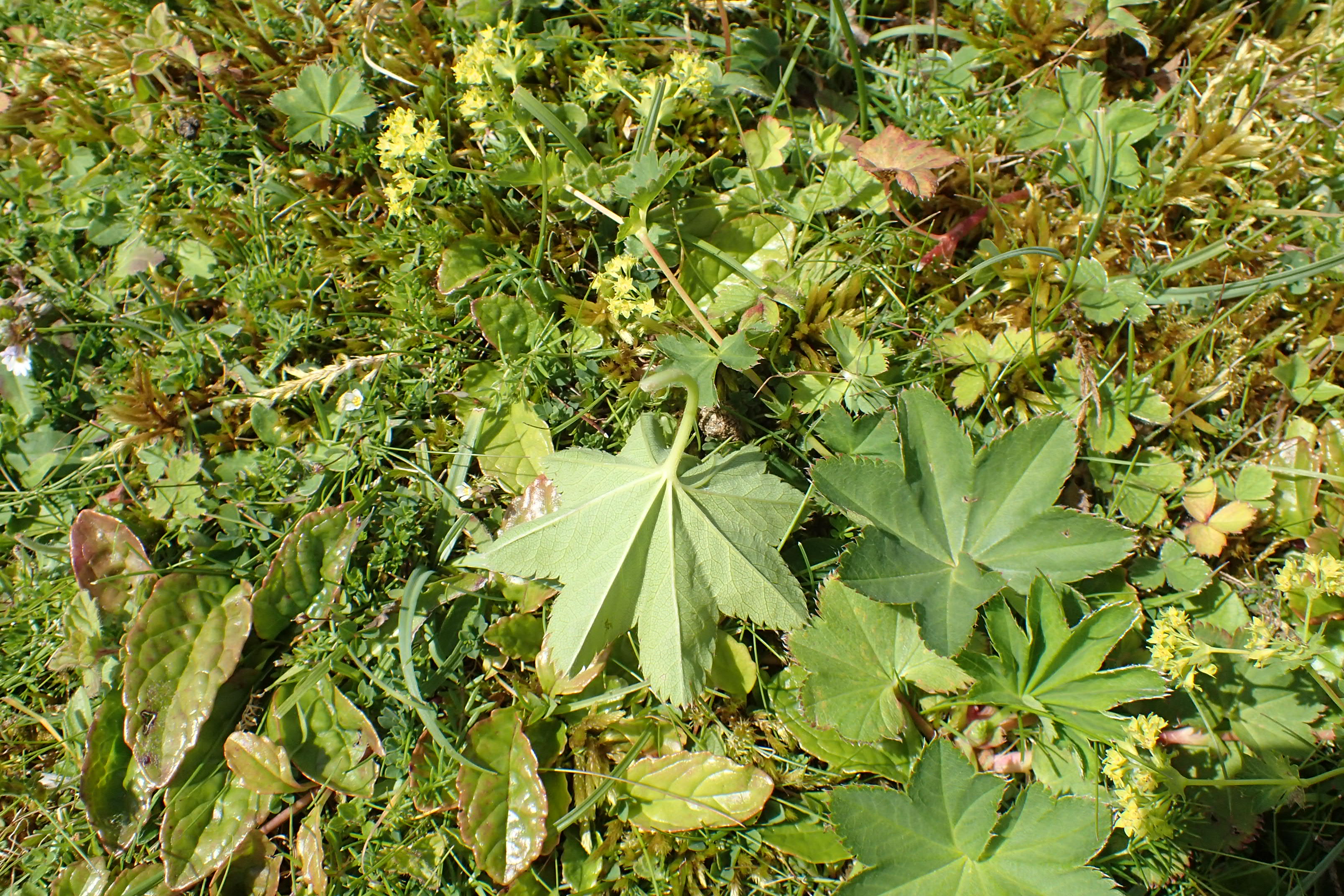
This is the quarry - with an amazing covering of Garden Lady' Mantle - Alchemilla mollis.  The rabbits do not like it.
It could do with some vigorous weeding. If it doubles in quantity each year in three years the quarry will be full and overflowing.

We did find three native species (see lower down)

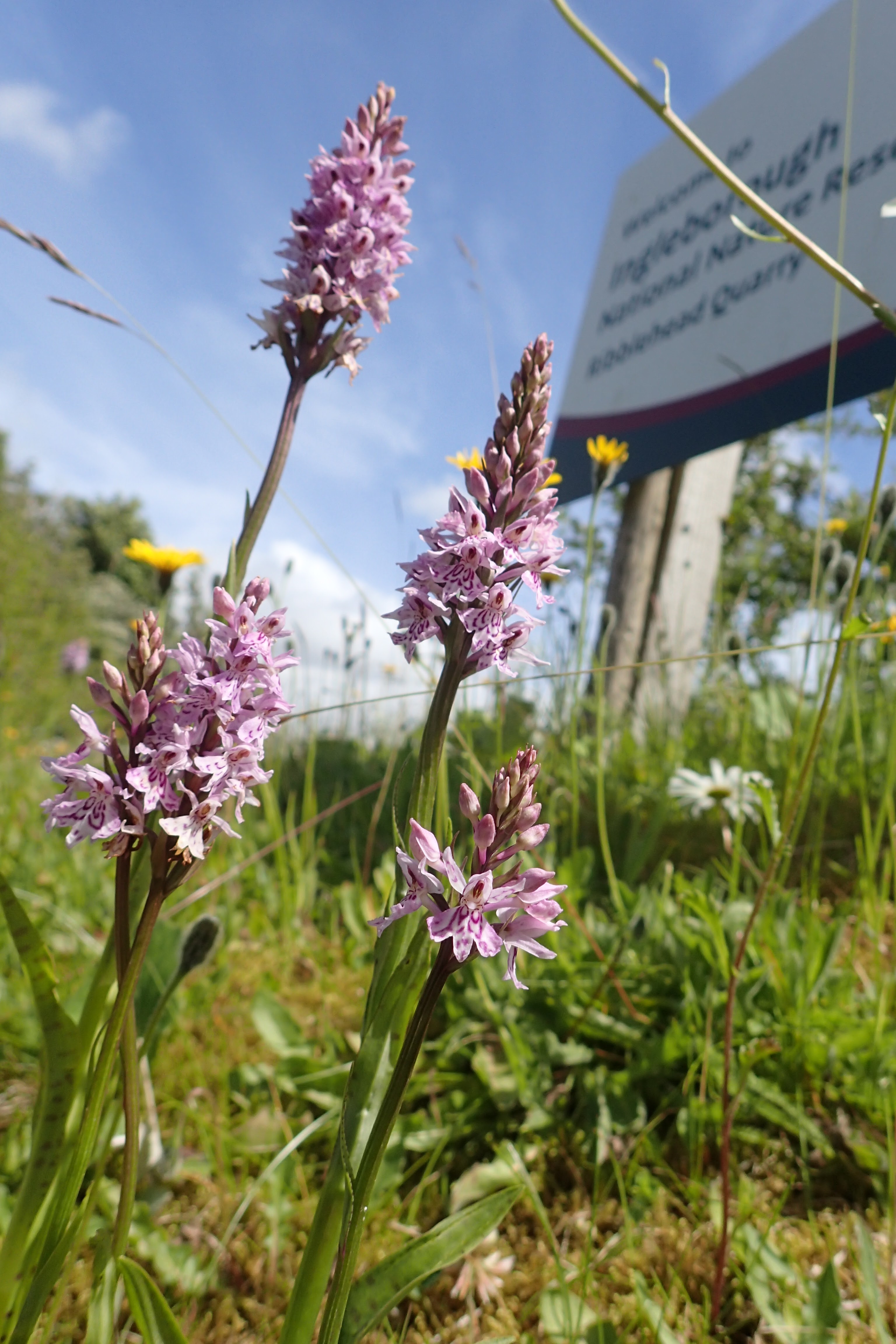
It might have looked good for Bee orchids but we did not find any. In the shade of wooded areas we found a very few Common Spotted orchids.

Snails: Terry O Conner went of looking for snails and came back with several including the 

Pyramidula umbilicata (formerly P rupestris or P pusilla) - rock snail, found under rocks and under stones in stone walls

Pyramidula umbilicata  close up -(formerly P rupestris or P pusilla) - rock snail, found under rocks and under stones in stone walls

The Lapidary snail has  lens-shaped shell with a clearly visible keel. Helicigona lapicida
  found by Derek Whitely

I was pleased to find plenty of Heath snail. (I have found this in the Burren, at Lower Winskill, at the slope high above Stackhouse but I am told it has disappeared though much of Yorkshire except at the Coast.
I was informed today that this is an annual snail - so it must overwinter as eggs.  Also it must grow quickly to get to this size.
We found lots of Heath snail shell one New Year's Day Plant Hunt in 2017 - at the liimestone cliff slope at the top of Bucker Brow, Settle. And indeed David Fisher who was with us in 2017 was here today too!

- I was concerned then that we were just finding dead Heath snails - but now can see why. 
Helicella itala - Heath snail

Helicella itala - Heath snail
this one was sitting on top of Cladonia rangiformis.


Distribution of Heath Snail


Flowers

Ian, Stella and I wandered round looking at flowers and Ian made a list which he will give to Linda Robinson the Plant recorder for VC65. 


 Stork's-bill - Erodium cicutarium 

We enjoyed finding  Stork's-bill. This does not grow at Settle. It is a southern lowland plant, and this far north I usually only see i near the sea.

We did find Dove's-foot Crane's-bill, Meadow Crane's-bill and Cut-leaved Crane's-bill
Dove's-foot Crane's-bill


Hoverfly on Hogweed

Waxcap - but which one? Did smell a bit of honey but does not look like honey waxcap.


Back to the Alchemillas

Here is a giant A mollis ready to gobble up space over the tiny Alchemilla glaucescens (I think)

Alchemilla glaucescens closer up. It has appressed velvety hairs on the back of its leaves and is small and likes to grow by footpaths (which is was doing)
This one might be Alchemilla xanthochlora

We also found A filicaulis and a possible A glabra.


This is a tiny Limestone Dandelion - I am hoping someone can tell me what species or at least group it is. 


It is a bit like the one I found on a limestone mound on Malham Lings in that there are a few reflexed involucral bracts at the bottom of the involucre - but the Malham yellow ray florets were much narrowerer - and present in May.
  
--------------------
Elsewhere Alister and others were finding Good King Henry, Water forget-me-not,  Brooklime, Typha latifolia and various Hypericums.

At the roadside near the main entrance to the quarry (gate firmly locked) was a Crepis  (Hawk's-beard)
We agonised over this for a while, but have decided it is Crepis capillaris  (This is much more common over nearly all of UK. C biennis is rarer and southern)). 
(Note Hieraciums have hairs on some/most parts, and the phyllaries (involucral bracts - green scales round the outside of the flowerhead) are graduated between innermost and outermost.  Crepis are glabrous except for the phyllaries and the phyllaries are in distinct inner and outer rows) 
It would be useful to go back and measure the length of the achenes - 1.4-2.5 in C capillaris,  4-7.5mm in biennis.


We


I learned from Stella that Nodding Thistle/Musk Thistle Carduus nutans has a strong perfumy smell. Yes. It has!
Later we tried Creeping thistle and that has a smell too.


Ian, Stella and I attempted to find the waterfall that others had talked about. We waded through bracken and long vegetation growing in the newly planted plantation  and looked down on a waterfall not far from the road.  But decided perhaps there was another one that the others had been talking about.


 We enjoyed tea with the others at Preston under Scar Village Hall and discussed out findings.
After tea Ian, Stella and I returned to the site and walked down to the "Condenser House"  workings area. There was Luzula sylvatica and Carex remota (Remote Sedge) and Bromopsis ramosa (Hairy Brome), and a bank of Devil's bit Scabious. It would be good if some trees could be cleared to make more glades in the wood.  I presume all the trees have gown over the last hundred or more years since the working were in operation. 
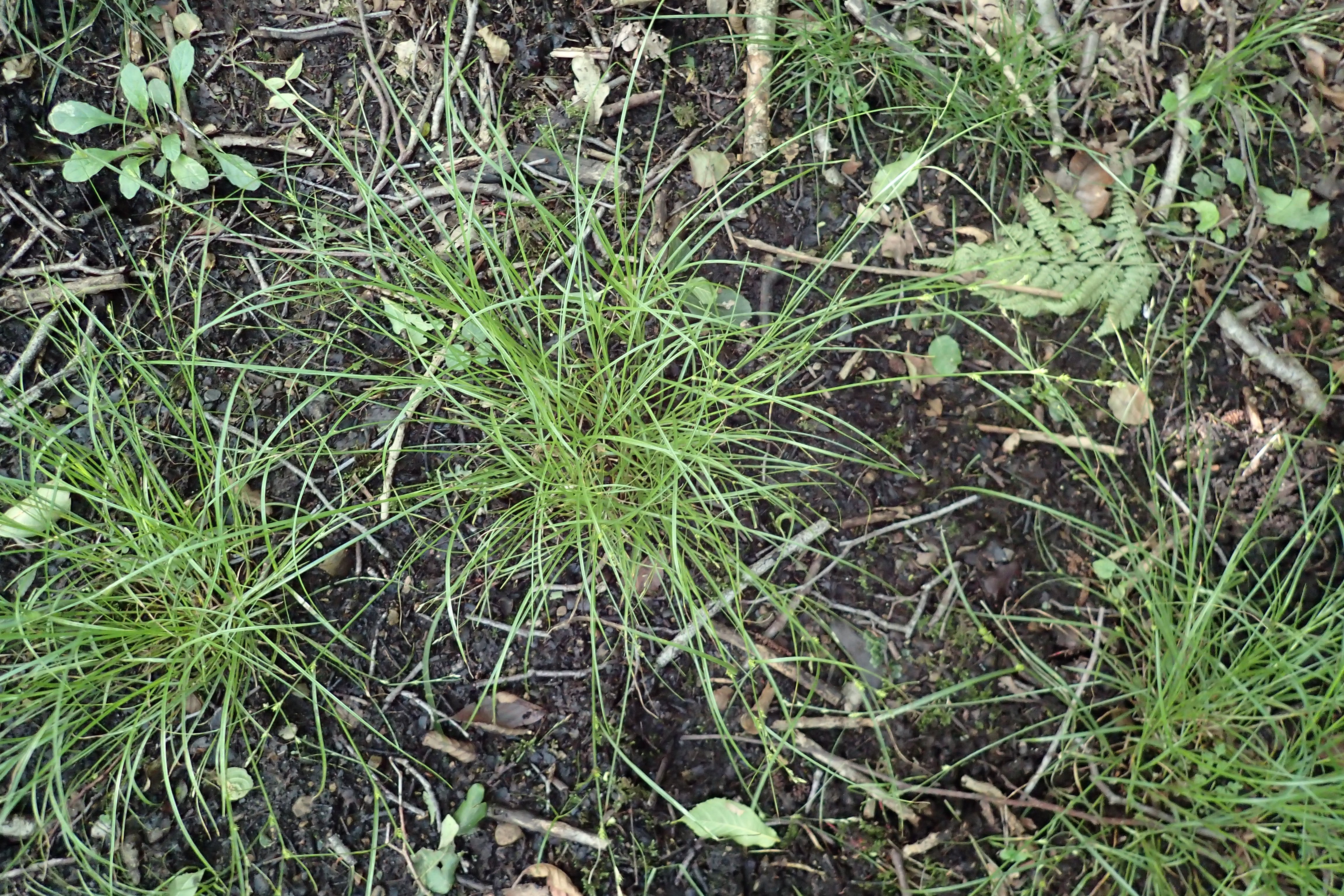


Carex remota

Lichens and Mosses.

The Lichens were not exceptional. We are quite a long way east so there were no species that need moist woodland. There was rather too much shade in the woodland, to allow may lichens to grow, and I did not see any very old trees..  I found one Peltigera (probably hymenina) on the footpath in the quarry.

Mosses: I did not notice any exceptional mosses.  However here are three pictures of some strong growth of three species. I suspect the wet spring has encouraged them: Rhytidiadelphus triquetrous, 
Flexitrichium gracile (I think)  and Distichium capillacium (I think) - I really need to check them.
Trying to cover too many groups at once!!.
Rhytidiadelphus triquetrous

Birds: We saw two kites circling over head and a peregrine shot past. A chiff chaff serenaded us in the wood.


The Next YNU Field meeting is at Castle Howard in 10-11 August

Sunday, 7 July 2024

Ribblehead Quarry Nature Reserve and Station Café


Our first day of the month walk (Craven Conservation Group and Churches Together Climate Walk) was finally held today the 5th, the first day with a decent forecast, at Ribblehead Quarry Nature Reserve

This sign  is the general
Welcome to the Nature Reserve sign at the entrance


. and on the day after the election when Labour got in with their big majority. Our Conservative candidate was returned, but had less than 2000 votes more than Labour. 

You have to drive to the other side of the railway at Ribblehead to park next to the nature reserve.  Today Common Spotted Orchids were blooming next to the notice board at the entrance.

We could not walk round all the reserve because there were white temporary signs saying "No entry, birds breeding"..  but still as we had a date at the Ribblehead Railway Station for tea it did not matter too much. And I did feel guilty by raising one vociferous lapwing to the sky.. and was respectful of the sign. 

near the entrance to the quarry


This wall below is made of different types of stone which represent the geology of Whernside (seen in the background) (the geology is also the same for the other two of three peaks).  Those people who have been here before may know what I am doing with the bottle of water.


Sitting on the seat which represents the unconformity between the "Slate" and the Limestone - a 100MYR gap.


We were rather shocked to see how much Garden Lady's-mantle Alchemilla mollis has been allowed to grow here. 
It has taken over part of Langcliffe Quarry at a terrific rate over the last four years.
  and Preston under Scar Quarry (as I would find out on Sat 6 July, the following day)


Thyme


A native wild Alchemilla .. growing next to..


A tiny patch of cotoneaster in the quarry floor.. 
(Hope that doesn't spread too..)


This is a plant which  spreads and covers tiny plants on cliffs


Water spearwort

Lady's Bedstraw


At the picnic table beside the pond - we had time to reflect on the notes produced by "PrayandFastForTheClimate:1 July 2024 - and since the 4th we have had the General Election yesterday. So we reflected on the work of the new government and the people with new jobs.
.
The pond was now nearly full of Bottle Sedge plus a few white water lilies.. But you could hardly see the pond.


Maybe one day I will find the name of this beetle which joined us at the table.. and by Monday Geoff had told me the answer.. Orchid Beetle Dascillus cervinus 
He had been to a Hay Meadow Day with the Lancs Wildlife Trust and discussed it with  others. Its larvae eat the roots of grasses


Northern Dock. Rumex longifolius. I think this (though still rare) is increasing along the roadsides in Upper Ribblesdale. It is near the southern edge of its limit here, and has increased in abundance along he roadsides over the last 30 years I think. 
 https://plantatlas2020.org/atlas/2cd4p9h.m1a


The following evening I picked a sprig of Northern dock from a plant at the roadside south of here to photograph the individual fruit. Broadleaved Dock has a tubercle (wart) on one of the tree sides. This Northern dock has no tubercle on any side.


Nearby I was pleased to see the Rhubarb plant was still surviving.
On a CCG moth rapping evening we had come here many years ago and the Rhubarb flower had attracted more moths than any of our lights.


A glance again at the Common Spotted orchids


I am holding pineapple fruit cake. the other two have fat-rascals.. Behind my head, in the centre of the picture 9bottom left of the board of keys) is a ticket machine. Geoff has a similar but older ticket machine he told us - the last one that was used on the Clitheroe line before the line closed (The Line  is now reopen but with modern ticketing)


See pictures and videos of singing in 2017

https://rainforest-save.blogspot.com/2017/12/settle-and-lakeland-voices-on-settle.html


Below Here are some pictures of Craven Conservation Group in September  2016


Limnephilus lunatus lily pond Ribblehead
This is the only adult Caddis I can recognise- The end of its wing has a half moon shape lighter area.


(see other climate walks here)

Thursday, 4 July 2024

Solenopsora candicans or Rhizocarpon umbilicatum

 Last Saturday we found the following lichen on a limestone rock near Kettlewell  

Recorded it as Solenopsora candicans. However now I wonder if it was really Rhizocarpon umbilicatum?


Can anyone give advice? This is the specimen


It had a thick white thallus.. and I can see a mollusc had been enjoying it..


Unfortunately we did not test it with chemicals
Dobson says R umbilicatum is C -, K+ yellow
S. candicans: K- P+ orange and presumably C-
----

The next day I was at a limestone wall above at 350m near Leck Beck, Lancashire (almost Yorks and almost Cumbria) and I found this lichen which I thought was R umbilicatum and tested it with K. After about 5 min it went this mangey yellow  (and nothing with C)

Rhizocaropon umbilicatum Wall between Leck Beck and Leck Fell House

Rhizocaropon umbilicatum Wall between Leck Beck and Leck Fell House

Rhizocaropon umbilicatum Wall between Leck Beck and Leck Fell House

----------------------------------------------

Here are some pics I have taken in other places when I have been sure it was S candicans in the past. These all have a distinctily placodioid thallus (-thallus with pleated edge) 
Solenopsora candicans

Solenopsora candicans Ingleton

 Solenopsora candicansIngleton


Solenopsora candicans - Winskill Stones

Solenopsora candicans High Hill Settle


--------------------------------------------------------------------------------------------------------------------

Rhizocarpon umbilicatum
R umbilicatum Highfolds with Allan Pentecost


--------------------------------------------------------------------------


Earlier we had found this pale yellow Caloplaca on the church wall at Kettlewell. Because of its colour I said "Caloplaca limonia".

But looking at pictures on the internet all the internet pictures I am not so sure.


Possible C limonia   ??


Wednesday, 3 July 2024

Settle Wildflowers 138: Lagurus ovatus - Hare's-tail

 This is a garden escape - but hey, it's the first time I have found it in Settle - on Tue 2 July 2024. It is growing at the foot of the wall next to the former HSBC bank on the market place - within sight of Settle Florists.. (possible source?)  as seen in picture.

Lagurus ovatus - Hare's-tail - also know as Bunny-tails.

I last saw it in the wild on the Dorset Cliffs whilst attending a workshop for the David Bellamy Caravan Site Park Awards (my title) over 20 years ago. 

It keys out in the Poland vegetative key as a grass with down-hairy sheaths and short ligule (1mm long) and an annual.

As there are only two heads on this plant, and one has been knocked over, so I don't think it is in danger of taking over Settle yet...


See more posts on Grass species here

See more posts on  Wildflowers of Settle including Lockdown walks here:-