Wednesday, 22 April 2020

Settle Wildflowers - Day 9 - Green 2

These flowers are actually greeny yellow.
The first two are "country flowers" - requiring relatively undisturbed places with low nutrients, i.e. low pollution.
The third is one you may well find in your garden.. and also in Settle footpaths such as the cobbles below Settle Coop.

The first two I saw on my exercise walk three weeks ago: 

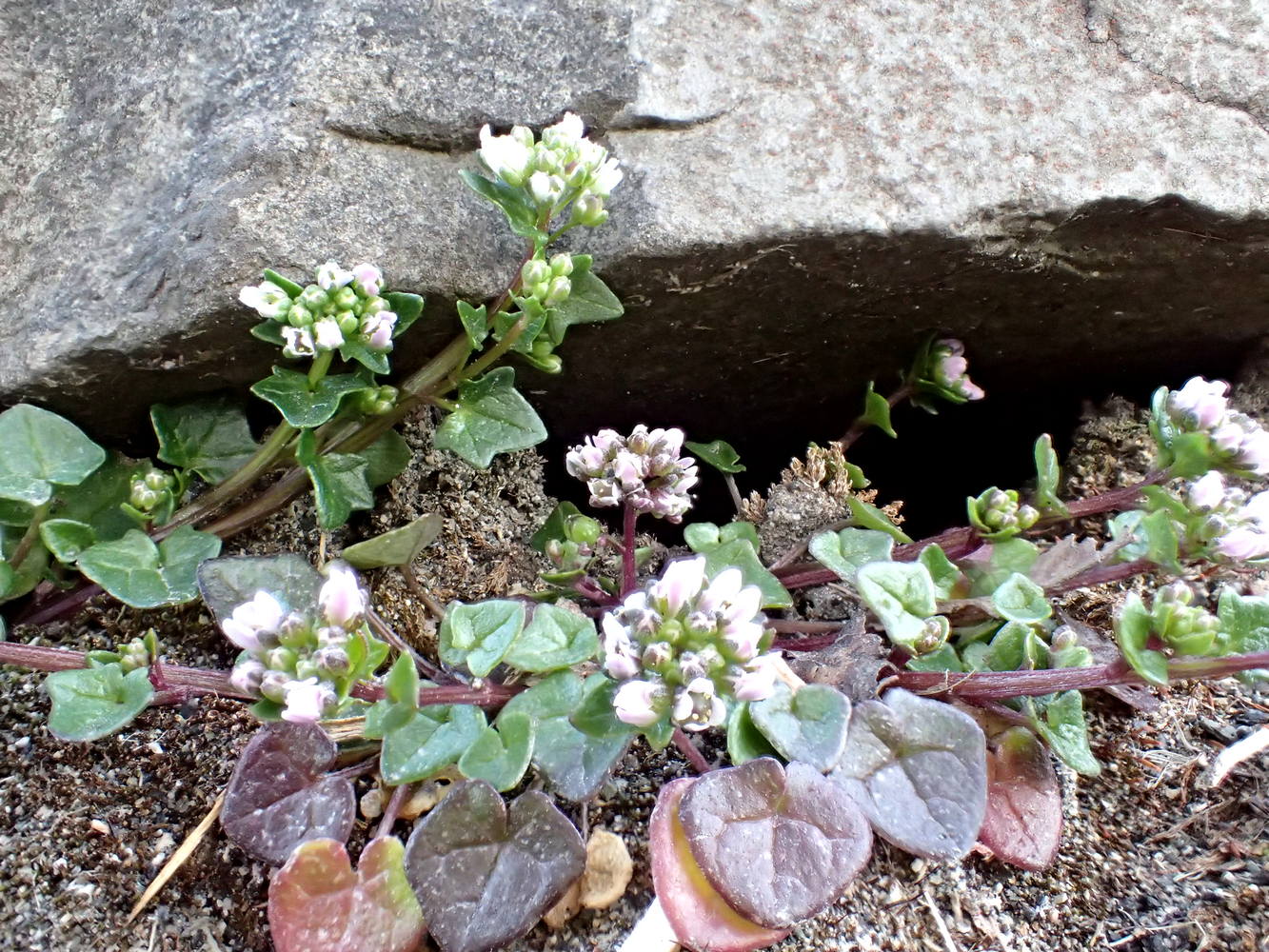
Opposite-leaved Golden Saxifrage and Alternate-leaved Golden Saxifrage. They both grow in wet flushes. e.g. streams and wet places by country footpaths.

The third I saw two days ago - Petty Spurge - though how long it will last with the current drought is questionable.  

The Opposite-leaved species has.. opposite leaves and likes lime-rich water. That is the one you are most likely to find. 
The Alternate-leaved species has .. alternate leaves, and bigger, kidney-shaped leaves. It is very rare in our area so I was delighted to find it near Settle. 


Opposite-leaved Golden Saxifrage:
Leaves smaller, rounder and the lobes more pointed


Alternate-leaved Golden Saxifrage:
Leaves slightly larger, more kidney shaped, and the lobes round not pointed

Alternate-leaved Golden-saxifrage


Petty spurge will be found in many of our gardens...

Petty spurge
Petty spurge


Petty spurge

Click here  for  Index of flowers coming out around Settle  or click on "Newer post" below -very bottom left - for the next post

Sunday, 19 April 2020

Settle Wildflowers - Day 8 - Yellow 2


Three flowers of a new colour each day - Flowers seen around Langcliffe and Settle on exercise walks 20 April

This is a true buttercup - but not one of the three three common ones. This is the special "Goldilocks Buttercup"
THe basal leaf is shown on the left with three big lobes and two tiny ones. the leaves on the stalk are divided.  Usually one of the five petals is deformed. This grows in calcareous woodland.


Beautiful Kingcups or Goldilocks. Though not the genus buttercup, this also belongs to the buttercup family.  They have lots of anthers
By Ged Benn


Seen looking down from the bridge at Langcliffe Lochs


Today 20 April is National Primrose Day to I must include a photo of a primrose. There are lots by the banks of the Ribble and on the Settle Carlisle Railway line.


Primrose beside Settle Calrisle Line, Hofman Kiln Langcliffe


Click here for  index of flowers coming out around Settle  or click on "Newer post" below -very bottom left - for the next post

Settle Wildflowers - Day 7 - White - 3

Hello 
We see so many white flowers at this time of year that an extra "white flowers day" is demanded this "week".

I'll even put an extra plant in at the end too- a nice big one to make up for the first three being tiny.

The first three flowers are weeds of gardens and disturbed places. The fourth is more of a hedgerow plant.

"Little white crucifers" all have four white petals and most have 6 or occasionally 4 anthers.
However the shape of the fruit can be distinctive.

I took all the photographs in this post. 


Flower 1:
The first is Spring Whitlowgrass.

The scale is cm on the left and inches on the right so you see haow small it is. there is lots of it on the cobbles next to the fountain in Langcliffe- most of them looking rather sad with the drought.


Here is the Spring Whitlow grass in fruit. They are flat oval shape.


----------------------------------------------------


Flower 2: 

Thale-cress (Arabidopsis thaliana)


Thall-cress, growing on the Settle Carlisle railway line at the path near the Hofman Kiln, Langcliffe


Here is a piece of Thale-cress I found on 1 January for the BSBI wildflower pant hunt in Settle

Its fruits are long narrow pods.


-----------------------------------------------------------

Flower 3: Shepherd's Purse:  Capsella bursa-pastoris

Here are members of Craven Conservation Group in Settle  discovering Shepherd's purse on a New Tear flower hunt several years ago.


ANd here are the flowers  of Shepherd's Purse (Also at New Year)  - well there is one at the very front.
Must take a better picture next time  I am down at the Coop shopping for food. And find one in fruit to show the herat shaped pods

------------------------------------------------
Flower 4


Bonus plant - in bud at the Hofman Kiln, Langcliffe, a few days ago


But now out at Langcliffe Paper Mill:

Yes it is Jack by-the hedge, also known as Garlic Mustard. Hedge Garlic
the Latin is Allaria petiolata. It is a biennial so started growing last year.


  Look closer 


and closer. 

You can see the stigma in the centre  (post with a fat top where the pollen lands).
How many anthers can you see round it?


Click here for  index of flowers coming out around Settle  or click on "Newer" post below for the next post

Saturday, 18 April 2020

Settle Wildflowers - Day 6 - White - 2

Wildflowers seen on exercise walks and in gardens around Settle (and most of UK) in April.  White flowers predominate in April. So we need have a run of three days on white flowers:


Number 1
The first white flower (on a shrub) has been flowering for  a fortnight, the second two flowers have been out for about a month:


Number 1 is a shrub - the first white shrub to flower in our hedgerows. (and is a member of the rose family)


Number 2


Number 2 grows on dry grazed and stony banks and has leaves like a strawberry is but does not have edible strawberry fruits. It is also a member of the rose family..


Number 3
Number 3 has four petals and grows on mortorway verges. 
We haven't a motorway in Settle - but it grows on the dry footpath on the main road that bypasses Stainforth, and it usually grows at the northern and southern junctions of Settle Bypass (but that is a long way for me to walk and check to these on an exercise walk.)


Number 1 is Sloe Prunus spinosus also known as Blackthorn
Sloe - or Blackthorn (Prunus spinosus)  this actually taken 1 April 2014  by JA
- with view of Settle from Castleberg Crag


Sloe (Blackthorn) on road to Stainforth
opposite Fairhurst's Stone Factory - 17 April 2020  (JA)


Number 2 is Barren Strawberry. Its leaflets are blunter than wild strawberry - which will be flowering in May. The middle tooth on each leaflet is very small. It grows on dry grassland banks.


Barren Strawberry  (Potentilla sterilis)  by Rachel Benson


Barren Strawberry  (Potentilla sterilis)  by Rachel Benson


Number 3 is Early Scurvygrass - Cochlearia danica
With its four petals, this is a member of the Brassicaceae - Cabbage or Cress family. Scurvygrasses  are edible and were used by sailors to prevent getting scurvy.
Early Scurvygrass - Cochlearia danica - by JA


Click here for  index of flowers coming out around Settle  or click on "Newer" post below for the next post

Wednesday, 15 April 2020

Settle Wildflowers - Day 5 - Pink

Flowers on our exercise walks round Settle and Craven. 


Here are two wildflowers that lots of people have noticed and pointed out to me recently:  including beside riverside footpaths.
And a third flower that you may not have noticed  has bloomed overhead


On the ground: Butterbur and Lady's Smock.

Butterbur is a member of the daisy / dandelion family.  That means that the heads are made up of lots of tiny flowers. From a distance it may look a little like a hyacinth in structure but close examination of the "flowers" show that they are made up of scores of tiny flowers each with 5 petal tips. 


The flowers come out before the leaves- but the flowers are now turning to fruit and the leaves are shooting up, and will become as big a rhubarb leaves.

It grows on riverside banks and roadsides


Lady's Smock has many other names, according to which part of the country you live: Milkmaids; Cuckooflower, Mayflower.  It is a member of the cress family and has four petals.

Ash flowers - end of March -First the two pronged stigmas show (above) 

Then on April below the stalks bearing the dark maroon anthers elongate and the anthers open and shed the pollen.


Click here for  index of flowers coming out around Settle  or click on "Newer post" below -very bottom left - for the next post

Tuesday, 14 April 2020

Settle Wildflowers - Day 4 - Blue


Wildflowers seen in our gardens and exercise walks in Settle and other Craven villages. Photos sent by members of Craven Conservation Group.

Flower 1:

The first of our blue flowers was sent in to Craven Conservation Group by John Perry of Ingleton with the hint:

"The colour of the flower does not appear in the name of the plant"

(Photo by John Perry) 
It is NOT Forget-me-not, nor Borage .

Though it is a member of the Boraginaeae family - which includes forget-me-not and borage 

This link shows the difference between Green Alkanet and Borage

It is a native of SW Europe

It is 

Green Alkanet -
There is a nice article here:
GREEN ALKANET: THAT MYSTERY PLANT, REVEALED

It is a garden escape and spreads, and it is pretty tough. It is not edible (apart from the petals which could be used decoratively)

It is interesting that it has been recorded in nearly every single 10km square in England except the Settle one.


From the BSBI 2020 records
https://www.brc.ac.uk/plantatlas/plant/pentaglottis-sempervirens

So have any of you seen it growing wild near Settle - within SD86?

------------------------------------------

Flower 2.

We are extending the definition of blue to include.. violet.

This is the commonest violet we have around here is
the Common Dog Violet Viola riviniana and that does grow in virtually every single recording 10km square in Britain.

Common Dog Violet   (Photo by Kay Easton)
--------------------------------

Flower 3:

Slender Speedwell by Judith Allinson

Slender Speedwell Veronica filiformis has (relatively) big blue flowers on very long fine stalks, and tiny leaves. It grows well in lawns. this was in the grass near the path beside the Settle Middle School playing field on the way to the river.
                               --------------------------------

For choosing colours I have been attempting to follow the colours of the rainbow


Sat: White

Sun: Yellow

Mon: Green

Click here for  more flowers coming out around Settle


Monday, 13 April 2020

Settle Wildflowers - Day 3 - Green

Flowers we can see in our gardens and exercise walks around Settle this month. 

Saturday 11 April was White flowers, Sunday 12th was Yellow flowers.   Today Monday 13th the colour is Green flowers around Settle, N Yorkshire

(and listen to  "The Passion in Plants" on BBC radio4 whilst it is still available this month - see our second plant below) 

Flower 1: 
Its initials are D M.
You may not know its name, but you'll all have walked on or through this if you've walked in the woods or along hedgerows around Settle.

(Picture by Geoff Morries)

This carpets the floors of our local woodlands if the bedrock is limestone or other non-acid soil. It grows in limestone pavement and along hedgerows if there is no grazing.
It is the height of a small nettle, though it does not sting. The plants are either male or female. This one is a male and the tiny make flowers on the stalks will have anthers.  

Dog's Mercury is poisonous so don't eat it!!

It has  is often found in ancient woodland, where other special plants grow.  It is not in itself an indicator of ancient woodland.  It has underground stems and can grow at a rate of about 3 foot a year along a new a hedgerow. So if there is already a few plants there it can spread into new woodland given one hundred years or so.

-----------------------------------------

Flower 2:
This is one that botanists and country lovers get excited about. If you miss seeing its flowers in April , well it is hard to notice or find it again till the next year.
It grows in base rich soil, often at the base of a hedge or trackside.
It has several names: - the one I was taught is "Town Hall Clock.  It has four "clocks" one on each side of the tower"/shoot and one on the tip facing the sky.

Because it is so special I am not going to say exactly which path / lane I found it on, but I was delighted to find it so close to Settle.

The Scientific name is Adoxa moschatellina.

Moschatel means little musk.  It was once collected for its scent 
There has been a delightful series of five talks on wild flowers in radio four this week, late at night: "The Passion in Plants". as Bob Gilbert and Brother Sam of Hilfield Friary go on walks and look fro wildflowers with links to the Easter Story.
Talk 4 -"The Crucifixion - The orchid and the Aspen" include a section on Moschatel - or "Good Friday Plant" as they say it is also known as.

Moschatel - Town Hall Clock (Picture by Judith Allinson)


 -----------------------------------------


Flower 3

The third green flower I am gong to choose is Sycamore. It is barely out yet (13 April) - I always predict that the leaf buds will remain closed and then break on 16th April. 
But I have seen one or two branches that are breaking the rule:
Here is a sycamore flower from beside the Ribble near the Settle College/Middle School (as was) playing fields.


(Picture by Judith Allinson)

Can you see that the leaves look shiny?
As soon as the sycamore buds burst, greenfly leap into action. They suck sugar from the soft newly opening leaves and a lot spills out onto the leaf.

There will be "A hive of  activity" as insects seek to make use of the period as tree leaves open when the leaves are soft and tender to eat.

Tomorrows flower colour will be Blue.


Sunday, 12 April 2020

Settle Wildflowers - Day 2 - Yellow

Happy Easter Everyone.
Three golden flowers for Easter Day:
Look out for these in your gardens or in hedgerows of your exercise walks near Settle (or wherever you live in the UK)

Flower 1:
This flower's name begins with C  (see bottom of post for answer)

(Picture by Ray Hill)
It opens in the sun and looks glorious., then closes in the late afternoon.  It grows by the path between the Football pitch and the Settle School playing fields. An in many other places. - lawns pastures, road verges

It has lots of anthers (the blobs at the centre where the pollen is produced).   It is not a buttercup but it belongs to the buttercup family. Buttercups have five petals - how many does this flower have?

  Here's another picture of the same plant: 


(Picture by Gerald Benn)

Still on flower number 1: with petals closed: (by Rachel Benson)
-----------------------------------------------------

Flower 2:

                                                         (by Sharon Flint)

This is not a Dandelion.  (It does not have white milk in the stem like dandelions do).

It's name also begins with C.

For those of you who speak French, I'll give you a clue - the french name is   Pas-d’âne 

The scientific name rolls off the tongue   Tussilago farfara  

The flowers come out before the leaves,  The leaves when they grow look a bit like small Butterbur leaves. (Name at end)


Flower 3: 

This flower is almost over,  - It is at its best in February:  but I photographed near the river in Settle yesterday. It's Scientific name also begins with C, and its nickname starts with C - and its English name with  H actually -  (answer at the end) 


Photo by Judith Allinson


I've had several more yellow flowers sent in - I'll post the next set of yellow ones in seven days time.

Tomorrows colour is green. And Tuesday's is blue.


Answers:  
1 .   It is a celandine!   

2.  Colt's-foot

3.  Catkins - Hazel Catkins

How many did you get right?