Wednesday, 8 July 2020

Settle Wildflowers - Day 55 - Red 9 - Magenta - Melancholy Thistle and Betony

On Monday (6 July) I went to Giggleswick Churchyard to photograph two magenta flowers that have just come out - and are not to be missed. They are wildflowers but were planted as part of a project with the Yorkshire Dales Millennium Trust to improve the diversity of wildflowers in the Churchyard.

1. Melancholy Thistle  Cirsium heterophyllum 


This grows on the roadside near Selside and also on the roadside a mile W of Malham Tarn. But this is the only walkable place from Settle and Langcliffe. I also saw it today in Colt Park Wood near Ribblehead. It is a northern and upland plant


It is called Melancholy Thistle because it is just so beautiful that it cures melancholy. The under-surface of the leaves are whitish.


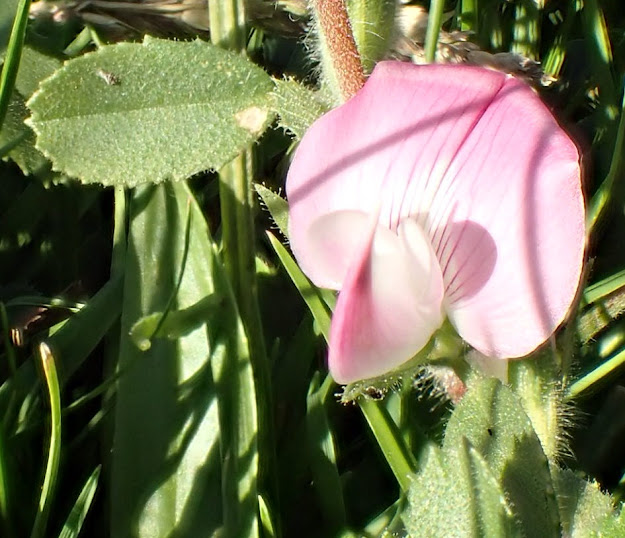
The second plant is Betony - Stachy officinalis


This does grow close to Settle - e.g  in fields at Lower Winskill Farm. I am sure some people see it and must think it is an orchid. 


This picture shows where it is growing in Giggleswick churchyard, next to a gravestone near the Melancholy Thistle


It is growing where they planted some Yellow Rattle. This year the Yellow Rattle has really got going - you can see that where it is growing the grass is now shorter - the Yellow Rattle is semi-parasitic steals food from the grass.


Click here for more flowers coming out around Settle 

Saturday, 4 July 2020

Letter To Julian Smith PM: Green New Deal: Responsibility of Leaders.

Here is the letter I wrote last week in 30 June to my MP Julian Smith (MP for Skipton and Ripon - which includes Settle)

I am looking forward to his reply.


Dear Julian

Thank you for being my MP and for all the work that you do. Thank you for coming to our Settle Hustings earlier this year after your busy day in Northern Ireland.

This is an email to remind you - as I am sure that you know - the main job of our MPs and leaders is to ensure our future security - 
both the people in Britain and the people in all of the world. 

It is what we (nearly) all want.

Decisions are being made now about how trillions of pounds are going to be spent worldwide.

Please for the sake of the future of the people in the UK and the people in the world

1. Do much more to prevent climate change.
2. Do much more to protect nature. (including Biodiversity, Soil Erosion, Fish Stocks)

Our present financial system in many cases is destroying these natural resources and nature.

------------------

I URGE YOU TO WORK WITH OTHER COUNTRIES TO DO THIS.

We need to work more with the EU and with other countries, not less.

--------------------------

I URGE YOU TO THINK AHEAD.

We (and others) have made mistakes by not preparing for a PANDEMIC and not reacting quickly to Coronavirus 19 quickly enough, and not organising effective testing, and not giving local control.

BUT CLIMATE CHANGE and LOSS OF WORLD BIODIVERSITY are MUCH BIGGER ISSUES.

Getting a Green New Deal - a real green new deal - is a way towards doing this.

The Deal that Boris will be talking about today needs to be much "greener".


"Getting a Green New Deal"

What does this mean?


GREEN 
summarized below
 
G - GREEN HOUSE GASES: Get net green house 
     gas production to Zero.
     By 2030 not just 2050
R - RESILIENCE: 
       a. Prepare the system to adapt to environment changes
       b. Show love.
E - EQUALITY: We need to have much 
       more equality. 
       Without intervention, inequality is just 
       getting ludicrously extreme.
E - EMPLOYMENT 
       with Green Jobs -
N - NATURE: 
       a. Protect Nature (Biodiversity)
       b. Protect Natural Resources: Soil; Fish Stocks;
           Mangrove Swamps; Clean Air; Coral Reefs;
           Ice Caps & Peat-bogs (as water reservoirs). 


Please continue to do your best to look after our future. 

We have made big changes related to the Pandemic. 

We can make more to ensure our future.

"It is insane to say we are growing economically if we are destroying the source of growth." (Quote, more or less, from Christiana Figueres)


Yours sincerely

Judith Allinson

Valuing what we have in Settle in our constituency:
bit.ly/Settle-Wildflowers


Settle Wildflowers - Day 54 - White 16 - Rose family and Edible - Chinese Bramble

"Have you ever seen this flower?"


If you live in Settle, well

"Yes you have."

It is ALL around Booths Car Park.

(I am just taking a break from Pink Flowers and skipping back to White Flowers so that you can go and look for it whilst it is in flower in the Car Park and not in (red) fruit.. if it does make any fruit this year)


Yep, it is a type of Bramble. 
But it is not ordinary Bramble. It has simple, not divided leaves. The dense red "spines" are soft not prickly. It is supposed to be good for flower arranging.

The great thing about doing this blog is that it has forced me to go and look up which type of bramble it is: Well it is Rubus tricolor - Chinese Bramble. It grows on slopes, forests and thickets at elevations of 1800 - 3600 metres in Sichuan and Yunnan.

 The Wildflower Finder Blog  has pictures of it spreading rapidly over sites in neighbouring Lancashire. It says that it rarely flowers.

That's interesting. One year I saw a man picking the red fruit from Booths Car Park and I thought "Good on him, making use of the fruit". 

Then I have looked for fruit in the years since and not seen any.

I had to look quite hard to find these flowers to photograph 

It is not self pollinating so requires insects for pollination.

The author of the Wildflower Finder Blog has not seen them flowering and says 

"It is spreading fast and should, if it is not already, be on the incredibly invasive species list.

Click here to see its distribution in UK - It seems to have centres in London and Manchester.
I see it is not recorded for Settle - but maybe as it is still just in Booths Car Park it does not count as a garden escape ... yet.

Have you seen it growing anywhere else around Settle? Do let me know.


Flowers at South East Entrance/Exit to Booths


 ---- Click here for  more flowers coming out around Settle ---


Tuesday, 30 June 2020

Settle Wildflowers - Day 53 - Red 8 - Pink: Orchids and Hay Meadow 7

Orchids are a popular group.

Whilst these four species below can be found in meadows, they are more likely to be found in "Recolonising habitats" such as quarries or road verges, or in "Low nutrient  pastures that are managed as meadows in that animals are kept out during May and June" of which there are a few around Settle which are managed as such for conservation reasons: they do not have fertilizer and cow muck applied.

1. Bee orchids 
These are  fascinating when viewed closely. They can grow in quarries and on on railway embankments (e.g. in or near Settle Calisle Line)  when the ground is mostly gravel and has not yet become colonised by dense vegetation


2. Fragrant Orchids


Fragrant orchids -- smell .. Mmm fragrant - like a bottle of perfume . They have a long narrow spur at the back of the flower. 

These two Fragrant Orchids were photographed three weeks ago - they were just coming out.

Another Fragrant Orchid


3. Common Spotted Orchids  - Dactylorhiza fuschii can come in a variety of colours.

Bucker Brow  29 June 2020


(Guest phot from Colt Park Meadows  experimental plots)


4. Northern Marsh Orchid

It is hard to find a Northern Marsh Orchid within 2 miles of Settle.  I In the place I was searching I (a damp road verge) I only found one.. and looking at the picture now, even that may be a hybrid.
Twenty years ago there used to be lots at this site. Now there are none - apart from this specimen.  The vegetation is growing very rank, with Rosebay Willowherb and trees on the bank and uncut grass next to the road.


Any comments?  I am open to suggestions.  I am not an orchid expert.


Here is an old picture from Malham Tarn Fen of a Northern Marsh Orchid?
An old picture from Malham Tarn Fen

And here is one from Malham Tarn this year - but these are definitely "Guest photographs." I had to cheat and drive to get them, so it is out of my 3 mile walking radius of Settle.

Near Malham Tarn 9 June 2020


Friday, 26 June 2020

Settle Wildflowers - Day 52 - Red 7 - Pink: Dog Rose and Rest Harrow

I have a backlog of pinks - but must show some up to date pictures too. 
Here are two favourites:  Dog Rose (Rosa canina) at the beginning of June and  Rest Harrow (Ononis repens) at the end of June

1. Dog Rose
comes out at the beginning of June:

Not before (and the same for garden roses)


Rosa canina has hairless leaves, and the spines on the stem curve backwards.


On Thursday 25 June after a hot day I parked at Booths and went out in the late afternoon to search for the leaves of the Rest Harrow that I had seen in May beside the Ribble in the fields south of Penny Bridge.  And I was really delighted to find it - somehow the cattle and sheep had not grazed it.


Whilst this plant is not particularly rare, the next nearest plants I remember seeing are near the Wharfe above Grassington - and then at Quarry Moor Ripon.

Its leaves smell of guava when crushed. You used to be able to buy tinned guava in the supermarket 20 years ago but I have not been able to find it recently.

It is called Rest Harrow because apparently it would block up the harrow.


Click here for  more flowers coming out around Settle


Wednesday, 24 June 2020

Settle Wildflowers - Day 51 - Red 6 - Pink - Moorland: Cowberry and Crowberry

It is now four weeks since my walk to Hunter Bark on that hot sunny day on 25 May.  I met a young man from the Fish and Chip shop (furloughed) who kindly asked if I knew the way. Later a couple from Long Preston bird watching. Otherwise it was very quiet. I was delighted to find these two moorland plants. I did find a few bilberry plants but not as good as below Cleatop.

It took me six hours on my walk starting from Greenfoot CarPark, from 3.45pm to after 9.45pm  (See pictures at end) - when I met two friends who had taken two hours to do the same walk earlier in the day)

1. Cowberry: Vaccinium vitis idae 

This will have fruit similar to bilberries, but red. 
They are edible, but as I only saw a few plants I do not recommend picking them. the leaves are rounder than bilberry leaves and are tougher and evergreen.


You can see I enjoyed it -I stayed out till almost sunset - and then had to walk two miles back to Settle. .. and why is it one so often finds the best things near the end?


2. Crowberry - Empetrum nigrum


You can see the anthers on the flowers. It shows the flowers are small.


This has tiny black berries - I have tasted them once but do not recommend them. This is a northern plant.


-----------------------------

I had set off from Settle earlier in the day, passing the Red Valerian
in Upper Settle at 4pm


And returning at 9.30pm via Peart Crags which gave me this view as I dropped down.


Click here for  more flowers coming out around Settle

We are now into pinks and reds!!!

Sunday, 21 June 2020

Settle Wildflowers - Day 50a - White 15 - Hay Meadow 6

Hay Meadow flowers: Today - White Hay Meadow Flowers.


It is also Mid Summers Day - and Day 50 of the  Settle Wildflowers. I have written a separate post: Reflections on Lockdown Wallks at Day 50 at Midsummer 


All the flowers below could potentially grow in a Hay Meadow but several of the pictures were taken in other habitats.

Most Settle Meadows are just green and they are Ryegrass Silage Meadows, not Hay Meadows. The farmer does not have to wait for a lot of dry days to cut the grass to make Hay. The farmer calls in the contractors and they  cut the grass in a few days and put it in silage bags.

Some meadows are white with a lot of Cow Parsley - that indicates a fair amount of nutrients too. But I covered Cow Parsley a month back.

Road verges often have more hay meadow/woodland edge flowers than do most hay meadows.

But it is still worth looking out for good hay meadows, and field edges.

1. Ox-eye Daisy 
Some few meadows can feature Ox-eye Daisy...

Ox-eye Daisy on The Mains, Settle


2. Eyebright  Euphrasia agg


Eye-bright, like Yellow Rattle is a parasite on grasses; 29 May, Lord's Pasture (which is managed by keeping stock out in early summer;


3. Meadowsweet  Filipendula ulmaria

An Early Meadowsweet at the Hoffman Kiln 18 June


4. Hogweed: Heracleum sphondylium

Hogweed that got away at Lower Winskill Farm 12 June


5. Mouse-ear  Cerastium fontanum


Mouse-ear - Cerastium fontanum 20 June - Colt Park.  This could also be found in the streets of Settle and in your garden


The pictures below are "Guest Pictures" from the work I started doing last week and am now able to do for four weeks at Ingleborough, ten miles from home.

I am carrying out some plant monitoring on the Long term monitoring plots at the Colt Park Hay Meadows on Ingleborough. It is six whole years since thy were last surveyed. I am lucky that we are now  allowed to travel, so is possible for me to do this work


Settle Wildflowers - Day 50b - Reflections at Midsummer

Well -  Day 50! 


50 blog posts; 150  wildflowers - all within easy walking distance Settle and home near Langcliffe, 1.5 miles away. i.e. withing 2 miles of each place, a sort of 6 mile oval shape. 

I have had a great time, discovering new walks; Seeing different plants come out at different times. I have combined it with searching for lichens too. 


I started posting on 11 April with Day 1, ten weeks ago.

Lockdown started on 23 March.
The end of March and beginning of April had been spent searching for lichens before the leaves come on the trees. 

Now the lockdown is coming to an end how can I maintain may freedom to continue with these walks? 

Can I have self discipline to do them, rather than relying on society banning car use and travel?

Whilst people in England have been able to drive to a distant place "to exercise" for several weeks now, (since ... May). I  only made use of this "freedom"  to drive  on 6 occasions necessary occasions.  I finally had to buy some fuel at the garage after 2 months!

So it left me plenty of time for local exercise walks 

- until a week ago. 

On Saturday 13 June, I started recording the Colt Park Hay Meadow Plots, ten miles from home which takes a big chunk out of most days. This is a four week job. It is long term monitoring and repeats the survey I carried out 6 years ago.

But I will keep up the walks 

Each post is followed up with a tweet and a post on Facebook.. Thank you to those friends and others in Settle and Langcliffe and elsewhere who encourage me.

Look - It is Midsummer now. And I am at blogpost 50.

Is this half way. Can I go on to Day 100 - in another 10 weeks time? ..   Maybe. Will there be enough new wild flowers to keep going?

Can I go on for another 50 Days?

We'll see.

Watch this space...

                            ----------------------------
Meanwhile.. 

I made a resolution to do one long local walk a week, starting as usual from home or from near the food shops in Settle. 
(So walks starting after a say five mile car ride from Settle don't count)

(Long in terms of time.. If the plants are good I don't get very far).

On Wednesday I had a local walk in the evening and found.. Bird's-eye primrose!!.. yes within 3 miles of Settle.

This morning  (Sunday 21 June) I had a very local walk - my back and front garden - as part of the Great Yorkshire Creature Count. 12 noon Sat-12 noon Sun.

I submitted my 43 observations of - it turned out 25 species - in the last half hour of the 24 hours. It is the first time I have used iNaturalist and taken part in such an event. Learning all the time!!!


Friday, 19 June 2020

Settle Wildflowers - Day 49 - White 14 - From Ground Elder to Elder to Guelder Rose then other members of the honeysuckle family

1. Ground Elder  Aegopodium podagraria - is a member of the Umbellifer family. The leaves are edible, but more tender if picked early in the year.


This Ground Elder was the first to come into flower in the Mains on 29 May. It will be familiar to many gardeners. 

A plant with similar looking leaves and flowers is:

2. The Elder Tree or Elderberry  Sambucus niger


Elderflowers on 1st June

Now this is a "food for free" plant I can recommend: Elder flower Fritters.  Dip  one of the big flowerheads as in the picture above into batter (Yorkshire-pudding batter - same as pancake batter) then fry in deep fat for 20 seconds - then serve with lemon-juice and sugar.


Elderflowers have fused petals (they start of as a tube and then have five lobes. They are members of the Honeysuckle family.
The Honeysuckle family (Caprifoliaceae) are the only woody plants with fused petals, inferior ovary and stamens only 4 or 5.

Another member of the Honeysuckle family is Guelder Rose

3.  Guelder Rose 
Viburnum opulus 


Guelder Rose

It is interesting that its head of flowers are arranged like many umbellifers with bigger flowers at the edge.. This one is planted near the path that leads down from the Langcliffe village over the railway to the Caravan Site.


When I was in Addingham on 16 March - (that was before  Lockdown on March 23) a friend showed me a garden shrub and taught me its name.


4. Viburnum tinus - Eve Price


                             -----------------------------------------


On 1 June I was walking in the path beside the railway to the Hofman Kiln I espied a shrub with these beautiful flowers - arranged in pairs.


5. Weigela florida

Yes it too is a member of the Honeysuckle family too. It is Weigela florida - a garden escape


Click here for more flowers coming out around Settle


Thursday, 18 June 2020

Settle Wildflowers - Day 48 - White 13 - Water Crowfoot

One Water Crowfoot, Two Water Crowfeet?

There are several species of Water Crowfoot - species of Ranunculus (buttercup) with white petals that grow in water. For the moment I won't say exactly which species these are - Just enjoy!


Water-crowfoot in the Ribble south of Runley Bridge 20 May


Water-crowfoot in the Ribble south of Runley Bridge 20 May


A different species in Tems Beck, Giggleswick - 11 May