Saturday, 7 September 2013

Agrostis gigantea - Black Bent


Grass of the Month for August  2013

Agrostis gigantea can be difficult to distinguish from other Agrostis's early in the year.


The individual spikelets are similar to other Agrostis spikelets - As in all Agrostises, the two glumes are longer than the single floret and normally enclose it.


Like other Agrostises, A gigantea has two glumes and one floret and
the lemma and the palea are both translucent.

 It is more of a lowland plant, where it can be a weed in arable situations.
The BSBI map shows it has not been found in the hectads east and north of Settle (mostly sheep grazed hills) - which perhaps explains why I do not see it often. - but it is common in the south.

As an arable weed it can be seen at fence boundaries, where it uses the fencing for support - it is a straggling pant. The fence also prevents the grass getting mown/ploughed up.

The emerging leaf is rolled, the stems are narrow, the blades are thin and narrow (2-7 mm wide), the ligule is medium to long,

It has a long ligule - this picture was taken at Tems Beck Giggleswick 30 June 2013


It has rhizomes.

Agrostis gigantea has rhizomes (Tems Beck)


It can be distinguished from other Agrostis's because:
Agrostis vinealis and Agrostis canina have very narrow leaves (less than 2 mm wide)
Agrostis capillaris (which has rhizomes) has has short ligules
Agrostis stolonifera (which has long ligules and blades 2-7 mm wide) has stolons not rhizomes. A stolonifera also has a rather small compact panicle with the panicle branches pointing up at an angle of 45 degrees.

As the year proceeds, A gigantea shoot grow longer and they branch 20 or 50 cm above ground with extravaginal branching - i.e. a side branch pokes a hole through the sheath and there are then two stems.


See a new shoot breaking though the sheath, 
on part of  the main shoot well above ground level.
(Tems Beck, 30 June 2013)


By flowering time (August) A gigantea has really big spreading panicles.


Here is a panicle. It is actually very big.
(Pot Hole Lane, Malham Tarn,  7 Aug 2013)
(See other months' grasses)


Friday, 6 September 2013

Calamagrostis canescens - Purple Small-reed


Grass of the Month for September  2013


It’s not often I come across a new, or relatively new grass for me.

For the quick way to key out this grass go here..

Meanwhile I’ll tell you the circuitous route I took to work it out.

“We’re going to visit a tiny patch of fen with lots of Devil’s bit Scabious,” said Craig “and it’s between some willow carr and a sand dune. You’ll like it”

It was in central Yorkshire, just east of the Derwent Ings.

To get there we bumped along under the sun, in the landrover,  along tracks past interminable arable fields, then two fields growing grass turf (to roll up and sell in strips)..


 The soil was indeed made of sand. We piled out of the landrover and saw sandy weeds: Sand Spurry (white flowers),  Stork’s-bill (pink flowers), White Campion,


Then we dropped down to this moist peaty area – and saw the patch blue with Scabious (Succisa pratensis), yellow with Tormentil (Potentilla erecta) and white with Green-veined White butterflies. Valerian and Angelica had finished flowering. Two Small Copper butterflies fluttered by (and there was Common Sorrel in the field – their larva’s food plant)


 Star sedge, Pill sedge, Common sedge, Carnation sedge, Brown sedge,
     (Carex echinata, pilulifera, nigra, panacea, disticha,)
Heath Grass, Mat grass, lots of Sweet Vernal grass, Creeping Soft-grass, Brown Bent, Common Bent, Velvet Bent
      (Danthonia decumbens, Nardus stricta, lots of Anthoxanthum odoratum, Holcus mollis,
       Agrostis vinealis, Agrostis capilaris, Agrosis canina


and Blunt-leaved Bogmoss Sphagnum palustre,.

“National Vegetation Classification categogory M26b.  (When surveying the Dales, any wet meadow that came out interesting came out to M26b – so this is what it must be - well a mixture of that and maybe U4)”

Craig had left it the area unmown to let the Scabious flower – It was 3 Sept.

Then we continued a little lower to the mown area. “What is this more yellow green grass?” he asked.

I sat down next to the 10cm long, but nevertheless mown grass. There were extensive patches of it – and when I pulled it up, a tuft of several shoots came out, not just one shoot.

Newest leaves rolled, slender blades (less than 5mm wide) and stems, shortish but not very short ligule – APPARENTLY hairless – it seemed like an Agrostis – but was too big for Agrostis capillaris. Non-descript, emerging leaf rolled – that is like an Agrostis.
Yet it did not have any of the features I might expect for other “Slightly bigger than Agrostis grasses” that might be found growing here:

  • No swollen base for Phleum
  • No orange marks and knobbly bits at the shoot base for Arrhenatherum
  • Not a fat enough shoot and dark red lower sheaths and black base for Alopecurus
  • No auricles for Elymus repens or Hordeum secalinum

Then by the fence we saw very tall uncut plants – still very slender – and the panicles narrowly spreading like rolled up plastic Christmas trees – all the tiny spikelets had fallen off – perhaps it was Agrostis gigantea – Giant Bent -


Yes that plant is an arable weed and likes to grow where there is a fence to lean on.. It’s shoots were branching half way up as does Agrostis gigantea (though the sheaths opened to let the branch out whereas Agrostis gigantea is supposed to have any side branches poking a hole through the sheath.
Further round the corner, by the ditch there were extensive beds of this.  I had never seen such dense stands of Agrostis gigantea.

Then we noticed more inflorescences – and saw that the tiny spikelets had pappuses – pappi? Of hairs – like tiny dandelion clocks.

Ohh.
It’s Calamagrostis! I said. (And hazy memories of having found a Calamagrostis near the Pocklington Canal 23 years earlier came back)


Not Calamagrostis stricta  (Narrow small reed)as at Malham Tarn because that has the leaves  very stiff and strongly ribbed with minute hairs on them to give a bluish effect, and a very narrow upright panicle.

Not Calamagrostis epigejos (Wood Small-reed) because that has wide leaves, almost as wide as Phalaris (Reed Canary-grass), and is a pest in woods..  mind this Calamagrostis seemed to be spreading rather extensively..


We looked it up in the book and it was Calamagrostis canescens

And guess what – it has HAIRY leaves. Agrostis’s are never hairy -  I just had not looked carefully.
-----
Since returning home I checked it in Poland and Clement:-

Lvs rolled | Auricles Absent | blades hairy above | sheaths hairless | sheaths open and overlapping – takes us to group HQ

Then strongly narrowed at base and wet habitats.
well definitely a wet habitat – but only slightly narrowed at the base.

Then strongly rhizomatous
Yes  there are great spreading beds of it now I look round – (You don’t get Agrostis gigantea in such beds, it’s much more scattered, and the shoots emerging more individually)

Now we have to split Calamgrostis purpurea (Scandinavian Small-read) from Calamagrostis canescens – Purple Small-reed:
 Calamagrostis canescens has slightly narrower leaves – 2.5 – 6mm (not 5-7mm)  and a slenderer culm – inflorescence stem  (1.5mm diameter - not 3mm diameter). And Canescens has a ligule that is 1 (-5) mm long, cilolate, obtuse, hairy, turning brown.
Ciliolate – the end of the ligule having lots of tiny hairs like an eyelash.  –let’s examine our specimen – yes it is!


Spiders made nests in the panicles


Not forgetting the brambles in the hedgerow as we left

Thursday, 5 September 2013

One World Week in Settle (14-) 20-27 Oct 2013

SETTLE ONE WORLD WEEK

One World Week Theme for 2013 is:
"More than enough?"

Download One World Week 2013 leaflet "More than enough?" (PDF)

Provisional Events in Settle (So far..):


Date   Location  Event Organiser
14 Oct
7.30pm
Townhead CourtThe Future of Tropical Forests - Illustrated talk with Dr Tim Baker, University of Leeds. At Townhead Court (across the road from Townhead Surgery) in Settle, entrance £3 (£1 for CCG members.) All welcome. Craven Conservation Group


20 Oct
3.30pm
St John's Church Hall, SettleThe Light of the World- Children's/Family Activities and cooked tea Messy Church
22 Oct
7.30pm
Friends Meeting HouseOne World Week Traidcraft Coffee Morning Traidcraft Group
23 Oct
6.45pm
St John's Church Hall, SettleLOAF Meal and talk by Christian Aid worker for our area Alex Jones on "More than enough if..."
Doors Open 6.30. Meal 6.45  Talk 7.30pm
Churches Together in Settle and District


Several private events are being organised this week too - e.g. a Japanese card making session.


What is One World Week?

One World Week is a Development Education Charity. Each year, "The Week" is an opportunity for people from diverse backgrounds to come together to learn about global justice, to spread that learning and to use it to take action for justice locally and globally.

Could you organise an event?

OWW in 2013 asks you to support or organise events that enable us to consider whether we:
• have had more than enough of consumer culture getting in the way of 
relationships with others in our communities and across the globe?
• have had more than enough of being defined by what we possess?
• have had more than enough of seeing our planet irrevocably consumed?
• take more than enough ourselves?

Gosh! 100 years of Harber-Bosch! Without N fertilizer we’d have no nosh. (food)

It is exactly 100 years 
since we first became able
 to make Nitrogen Fertilizers 
on a large scale:-

I wonder why there is not more celebration of this fact?

Good article here

It is essential to the nourishment 
of at least 2 billion people
(i.e. the world population could not have increased from 5 billion to 7.1 billion without this)


We can rejoice!!

But look at the other fact:- 
Half of the nitrogen 
contained in the vast quantities of 
synthetic fertilizers now produced 
is not assimilated by the plants 
and is found in rivers
and atmosphere as volatile chemical compounds.[15][16]

and I would add.. in plants on walls and trees that like high concentrations of nitrogen compounds, such as this filamentous green alga Klebsormidium crenulatum
It looks like green velvet. It seems to do well on millstone grit but also on bark and slate.

(Links to other Klebsormidium crenulatum pages on this site)
Klebsormidium crenulatum on millstone grit wall

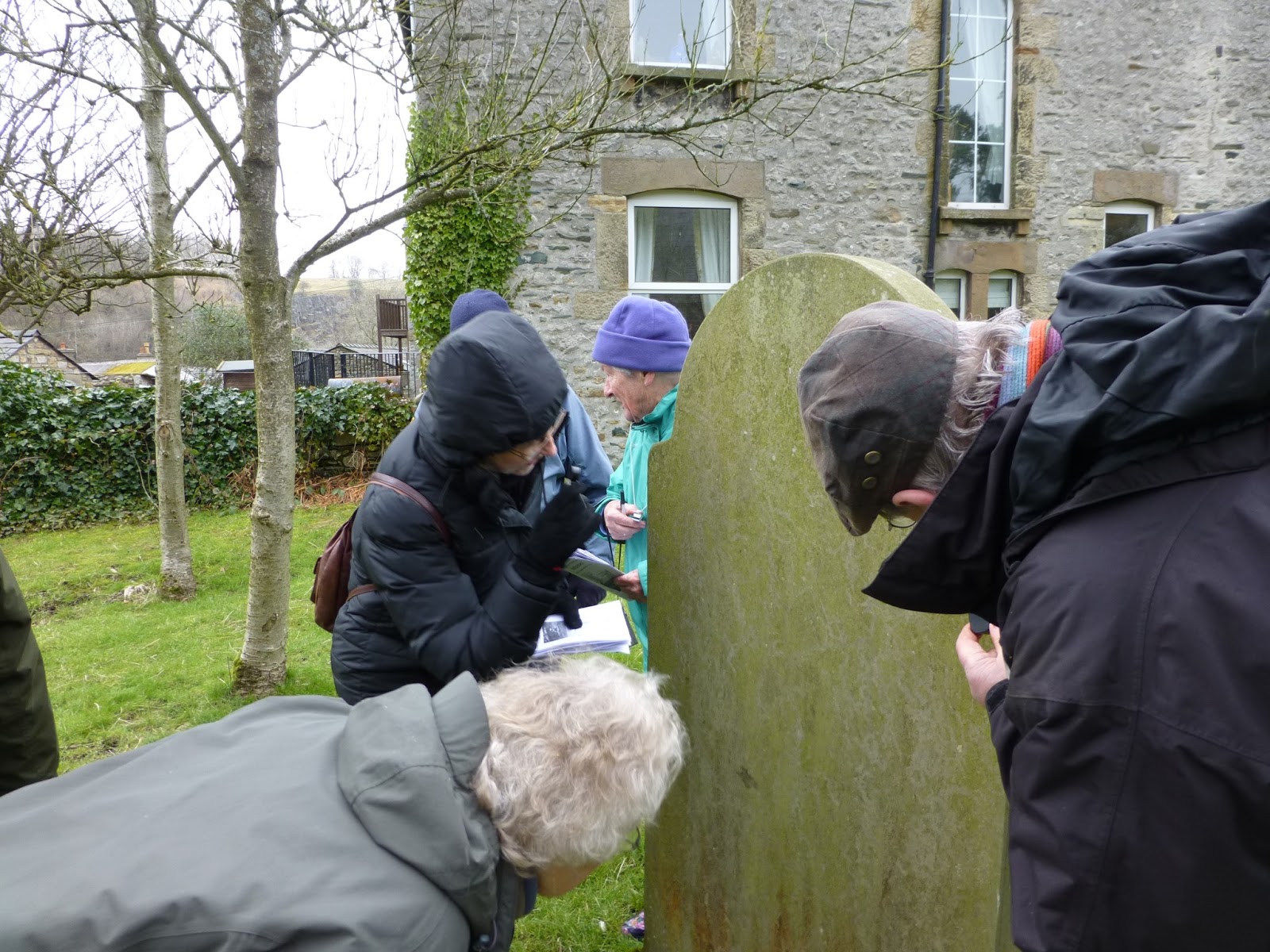
Klebsormidium crenulatum on slate tombstone
Cows, poultry farms and pig farms, especially intensive ones are a big source of ammonia and nitrous oxide    Nitrous oxide gives 6% of the greenhouse gas in UK.

Levels of nitrous oxide in the atmosphere have increased by an estimated 13% due to industrialisation and it is responsible for about 6% of global warming.

The main sources of nitrous oxide emissions are:
agriculture
industrial processes
deforestation

Nitrous oxide pollution from agriculture mainly comes from using inorganic nitrogen fertilisers and from storing manures.


From Wikipedia:- 


In 1913, barely a research team from BASF, led by Carl Bosch, developed the first industrial-scale application of the Haber process, sometimes called the Haber-Bosch process.
In the early twenty-first century, the effectiveness of the Haber process (and its analogues) is such that more than 99 percent of global demand for synthetic ammonia, a demand which exceeds 100 million tons annually, is satisfied thereby. Nitrogen fertilizers and synthetic products, such as urea and ammonium nitrate, are mainstays of industrial agriculture, and are essential to the nourishment of at least two billion people.[11][14]Industrial facilities using the Haber process (and it analogs) have a significant ecology impact. Half of the nitrogen contained in the vast quantities of synthetic fertilizers now produced is not assimilated by the plants and is found in rivers and atmosphere as volatile chemical compounds.[15][16]

...Makes you think....

Article on Harber Bosch

Friday, 2 August 2013

Malham Tarn Fen and Bog and 70 years of the FSC

Seventy Years of the Field Studies Council
International Bog Day
Malham Tarn Fen and Bog
Malham Tarn Field Centre
A quality community event - 1000 ft above sea level at a source of the river Aire.
30 Years of Craven Conservation Group

Field studies courses are a brilliant experience.
The Field Studies Council (FSC) has been running them for 70 years.

Well done to those before and in the war period who set it up - and to all those who have run centres and courses ever since!

There are lots more pictures lower down this post.

I dedicate this page to everyone who has stayed or come on a course at Malham Tarn Field Centre,..
and also to those who have come on National Trust guided walks and to the area on school trips.
 And a big thank you to the National Trust, and its workers and volunteers  who maintain the estate,
and to landowners and farmers and workers who have looked after the place in the past..

                                 ------------------------

27-28 July 2013 were  set aside by Malham Tarn Field Centre as an Open Day to celebrate 70 years of the FSC.

The FSC now has 17 centres.

"Field courses" are environmental study courses:-
a "holiday" to learn about some aspect of the environment!
 Whether your choice is birds, geology, insects and learning skills such as art, painting, navigation, fly fishing...

  • School children enjoy a first residential stay away from home & learn skills with their peers. 
  • Environmental workers  come and train. 
  •  Families and retired people can start a new specialism.. and maybe contribute towards species recording.


The FSC strapline on the internet says:- the FSC is a registered charity committed to helping people of all ages understand and be inspired by the natural world.
It is 65 years since Malham Tarn started running field Courses. The FSC leases Malham Tarn Field Centre from the National Trust. And guess who was a special visitor at the FSC Members meeting on the Saturday afternoon: Mrs Mary Reckitt, who was the wife of the first warden Paul Holmes!

The FSC is keen for people with memories of Malham Tarn (and the other 16 Field Centres) to post their memories. You can read them here:-
http://www.field-studies-council.org/about/fsc-70th-anniversary/fsc-memories.aspx on

I have met several people in Settle, now in their seventies and eighties who came up to the centre from school at Settle or Skipton... One day soon I will add mine (from 1960s, onwards..)

28th July is International Bog Day and has been celebrated as such by various places since about 1989.  It is an EXCELLENT time of year to celebrate bogs because so many of the special wetland plants do not flower till late in the year.

I have written a post about the importance of Bogs here. - Although bog pools can be dangerous, and should be respected, Bogs are vitally important and fascinating places: - they are:

  1. Carbon reservoirs, 
  2. Water reservoirs, 
  3. Reduce flooding,
  4. Historical/archaeological repositories showing history in the pollen and peat.
  5. Wild places to experience solitude and nature
  6. And, most important:  are wildlife reserves. One lady (from Lincolnshire) on a guided walk was delighted to find cranberries and lamented the loss of the wetlands in Lincolnshire where they once grew.

I led four walks during the two days onto the fen and bog, and I gave short picture presentations on Malham Tarn fen plants and on the History of Craven Conservation Group

During the two days at least 17 people from Craven Conservation Group (CCG), our local natural history society came up. (An include: JH and son A, CT and husband P, TM, DT, RC, DC, SF, PF, TW, JA, K, AC, AB, KB and we gained a new member  .. tell me if your initials are not here.)
CCG was started at Malham Tarn Field Centre 30 years ago, so this was a birthday celebration too!

Terry Whitaker opens the moth trap
at 11am on Saturday morning in the courtyard of the Field Centre.
Terry is a member of CCG and also of the Yorkshire Naturalists' Union


There were only 6 people in my first group. Here four of them are looking at what I call the "Paul Holmes Pool". BTCV volunteers clear (or at least used to) a section of the pool every two years, otherwise it would get taken over by bottle-sedge.
In this pool grows bladderwort - and the three weeks of good weather had led it to flower...(See next picture)

(The group comprised one lady who was a "Member of the Field Studies Council and had come up from the south for the event. One friend from Lancashire who had read my email, and who runs a children's wildlife group. The husband and son of a stall holder at the event, and a member of Carven Conservation Group and her son.)

The beautiful bladderwort flower.. and lots of buds ready to flower.

As we returned along the boards we met Sharon and Peter Flint  
who were investigating the animal in a peat pool.


See below for what we were photographing


A froglet

A dragonfly nymph.. this is two years old -
the really big ones (three years old) had emerged
and were now flying round as adult hawkers


-------------------


In the afternoon we had a bigger group of 18 people, 10 of whom are seen perched on the bridge.


Afternoon session on the Saturday -
the meadow sweet and reed canary grass is doing well.

In the evening we had music from two live groups. This group, The Zealots  is playing soul music.


The Moonbeams et al played inside later in the evening


A friend and I walked up to see the walled garden.
 which is maintained jointly by the National Trust and Malham Tarn Field Centre
some of the volunteers and school groups
that come to the National Trust.

 A tutor at the field centre said: "Basically the neat, 
tidy and smart looking bits are the NT's 
and the more rustic beds are the ones we have 
worked on with visiting school groups!"

Sunday: What a change in weather!. It had rained all night.
I gave my neighbour a lift up and we approached the centre carefully. would the cave near the centre be flooded? .. yes it was.. and a stream was running across the road. I took photos of the Giant bellflower - when it comes into flower I know summer is nearly through.


and over the adjacent wall the water flowed across the fen.


A quality community event - 1000 ft above sea level at (one of the many sources) of the river Aire.

----------------


The 11.15 group on the Sunday pause at the bridge.
Notice the water in the stream is right up to the bridge..
the grey flat layer at our feet are petals of meadow sweet
and other plants that have drifted along the stream and piled up at the bridge.

Our group includes:: 3 CCG members;
A visiting FSC member who had initially had a lot of contact with Flatford Mill;
Two stall holders and their three children;
A man from Preston and four (or was it six) young Spanish/South American people visiting him

Here are the same group walking over the bridge at the west end.
This bridge used to have a hand rail.
I have written to ask the National Trust to build another handrail here
The water is high but has another 2 inches till it will reach the bridge.
----------------------

Back at the centre, Jo runs a workshop on foraging


Inside a lab, a craft workshop is taking place

-----------------
The afternoon walk is a select group - including a CCG member,
another person interested in wildlife on my email list,
Sharon and Pete who are YNU/CCG and
a couple on holiday in Grassington who "stumbled across"
the event and were delighted to take part.
Perhaps you can see more clearly here how the water level in
the stream has risen to touch the bridge.

Sharon showed us the malaise trap
Insects fly into the net, Sharon explained, the crawl up the net and get caught in a bottle of alcohol.
They are especially interested in Caddis-flies.

Sharon and Pete  have a blog  http://flintsentomologists.moonfruit.com/#/blog/4568748663
They are  running a course 30 July - 2 Aug up at Malham Tarn on Freshwater invertebrates


Back on the boardwalk we found a baby lizard


Come on a course at Malham Tarn -- e.g Grasses Sedges and Rushes starting this evening (2 Aug) - you can come on that as an individual day visitor too (ask for details. but if you don't know anything about Grasses and Sedges it would be best if you came on the Saturday)

On Saturday 10 Aug I will be leading a walk on the wheelchair accessible part of the board walk.. So if you are not very mobile that would be a good time to come.

You can support the FSC's campaigning activities by becoming a supporter..

and if you have a little money to donate (£36) you can become a member - the £36 goes to one of the FSC's three funds (FSC Kids Fund, FSC Bursary Fund or FSC Young Darwin scholarship Fund  for people 16-17 yrs old who want to learn more about a branch of wildlife
http://www.field-studies-council.org/supporting-us/fsc-membership.aspx

Read the post I wrote about International Bog Day and Malham Tarn fen just before the event

Monday, 22 July 2013

Press Release - International Bog Day 28 July 2013

PRESS RELEASE    21 July 2013

INTERNATIONAL BOG DAY 28 JULY

Events at Malham Tarn, Settle, North Yorkshire.
28 July is International Bog Day
     “Save British bogs – and visit one on International Bog Day- 28 July 2013”
says bog-plant botanist Dr Judith Allinson.

Malham Tarn in North Yorkshire has internationally important wetlands including the Bog and Fen, and a series of events are being organised for the public over 27 -28 July ...

Judith, who will be leading guided walks at Malham Tarn Bog and Fen on 27-28 July says:     “I recommend Malham Tarn Open Days (27-28 July). This is an opportunity to visit Malham Tarn Field Centre and grounds which are not normally open to the public, and to see stalls set up by many community organisations. The walks and workshops are a chance to learn why Malham Tarn Bog and Fen are so special, and to be shown the names of some of the plants and animals. Children welcome.”

The events are being organised by Malham Tarn Field Centre (Sat and Sun), the National Trust (Sun), Craven Conservation Group and the Yorkshire Naturalists Union Fresh-Water Group (various times)

1. What is a bog?
2. Why are bogs important?
3. Why have peat bogs been lost?
4. Why is Malham Tarn Fen and Bog so important?
5. Activities at Malham Tarn 27-28 July
6. Some International Bog Day events in different countries.
7. Wildlife examples for Malham Tarn Bog and Fen
8. Settle Age UK and Bog plant display at St John's Methodist Church Hall,  Settle

Peat Bogs are important fascinating vital habitats.

1. What is a peat bog?
As organic material accumulates in a wetland area, the organic material becomes more acid. Sphagnum (Bog-moss) starts to grow. This is too acid for decomposition to occur, so the Sphagnum piles up and up and forms peat. The peat may be several metres deep. If the bog forms above water it may be a quaking bog.

2. Why are bogs important?
Peat bogs are important for carbon storage (to avoid global warming), for water storage (to avoid flooding and droughts) and for wildlife. Peat bogs take thousands of year to form. Pollen preserved in peat tells us about past vegetation. Archaeological remains have been found in peat.

3. Why have peat bogs been lost?
Many of Britain’s Wetlands and Peat bogs have been lost by drainage for agriculture or sheep grazing.  If the water table is lowered in the surrounding area, or if birch trees become established, or tracks and foundations are built on pristine bogs for wind turbines,  the bog can dry out. Carbon dioxide is then emitted rather than being absorbed.
Many of Britain’s Wetlands and Peat bogs have been lost by drainage for agriculture or sheep grazing.  If the water table is lowered in the surrounding area, or if birch trees become established the bog can dry out. Bogs in Britain and Ireland are lost because the peat is used for garden compost and for fuel (including for power stations). There is a conflict of interests.

4. Why is Malham Tarn Bog and Fen so special.
The bog is acid. Round the edge of Malham Tarn bog there are limestone springs, and limestone  grassland. There is a gradation of vegetation types from the acid to the limestone which has been lost in most other bogs in England.  There are many special rare plants and insects here. The Fen and Bog are part of a National Nature Reserve, and a Ramsar Site (Wetland  Site of International Importance).

 5. Activities at Malham Tarn 27-28 July
 Guided walks for plants (from Mosses to Sedges, Ferns  to Flowers) will be led by Judith Allinson  of Craven Conservation Group at 11.15 am  both days and at a later time during the day.(01729 822138 to book) . Freshwater investigations (pond dipping and workshops looking at the creatures in the lab under microscopes) will be led by Sharon and Peter Flint (of the Yorkshire Naturalists Union) on the Saturday at 1pm. This is part of the Tarntastic Open Days at Malham Tarn Field Centre, held to celebrate 70 years of  activity of the Field Studies Council (F.S.C.) .(The F.S.C. runs  17 Field Centres .. of which Malham Tarn was one of the first four to start. The F.S.C. has leased the centre from the National Trust since 1947, and runs plant, animal, ecology, geography, art and other creative courses for schools, universities and the public)   

The National Trust which owns the Malham Tarn Estate will be running family events on Sunday 28th from 11am to 3pm including pond dipping, craft activities and bird boxes. (01729 830416)  Malham Tarn Field Centre will be running some activities for children (01729 830331)

 6. Other events for International Bog Day include:
 The Northern Ireland Bog Snorkelling Championships at Peatlands Park
 ... Events in Chicago and Illinois  and British Columbia.

7. Wild life on  bogs and Wetlands at Malham Tarn
Examples of birds at or near Malham Wetlands: include: Curlew, snipe, redshank, golden plover, meadow pipit;  Insects: Great diving-beetles, dragonflies, damselflies and caddis-flies. Other animals: lizards, water-shrews. Plants: Carnivorous plants such as sundew, butterwort and bladderwort; Edible fruit: bilberry, cowberry, cloudberry, cranberry;  Beautiful flowers: bog asphodel, bog rosemary, cross-leaved heath; Mosses: In Britain there are 34 different species of Sphagnum (Bog-moss) of which half can be found at Malham Tarn. Amazing!.

8. As a precursor to International Bog Day Judith gave a workshop at St John's Methodist Church Hall, Settle to Settle Age UK, on Friday 19th July and with the help of the participants prepared a wall display which hall participants can enjoy..

Judith Allinson says
     "Do come to Malham Tarn - or visit a bog near you. Find out more about bogs from your local Natural History Society and avoid using peat-based garden compost."  

ENDS …………………………………………………………..